
What should someone review before resubmitting a visa photo so the same issue does not return again? The task gets safer when the reviewer checks the requirement, the edit, and the export as one linked chain instead of assuming the last correction solved everything.
The Dayfiles route behind this kind of work matters because the file is rarely alone. It usually sits inside a broader image or PDF workflow, so the checklist has to protect the handoff as well as the visible page or image.
Resubmission-ready photo check
- Re-read the destination photo rule.
- Compare the rejected file against the source image.
- Correct crop, background, or export issues one at a time.
- Review the revised file against the stated requirement.
- Export a clearly labeled resubmission copy.
- Archive the earlier rejected version separately.
That ordered pass works better than a loose review because it keeps the operator from jumping straight to export before the risky details are checked.
Why resubmissions keep happening
They keep happening when the person fixing the image addresses the visible symptom but not the original requirement mismatch. The second file looks different but still fails for the same reason.
What should be checked before editing starts
Check the destination standard, the original image quality, and the exact reason the previous file failed if that information is available.
What the final review should catch
Alignment, background cleanliness, size, export format, and anything that looks over-edited deserve one more look before upload.
What should be archived after approval
Keep the accepted file, the rejected version, and the original image separate. That makes future re-submissions or alternate destination requests much easier to manage.
Where this fits in the Dayfiles flow
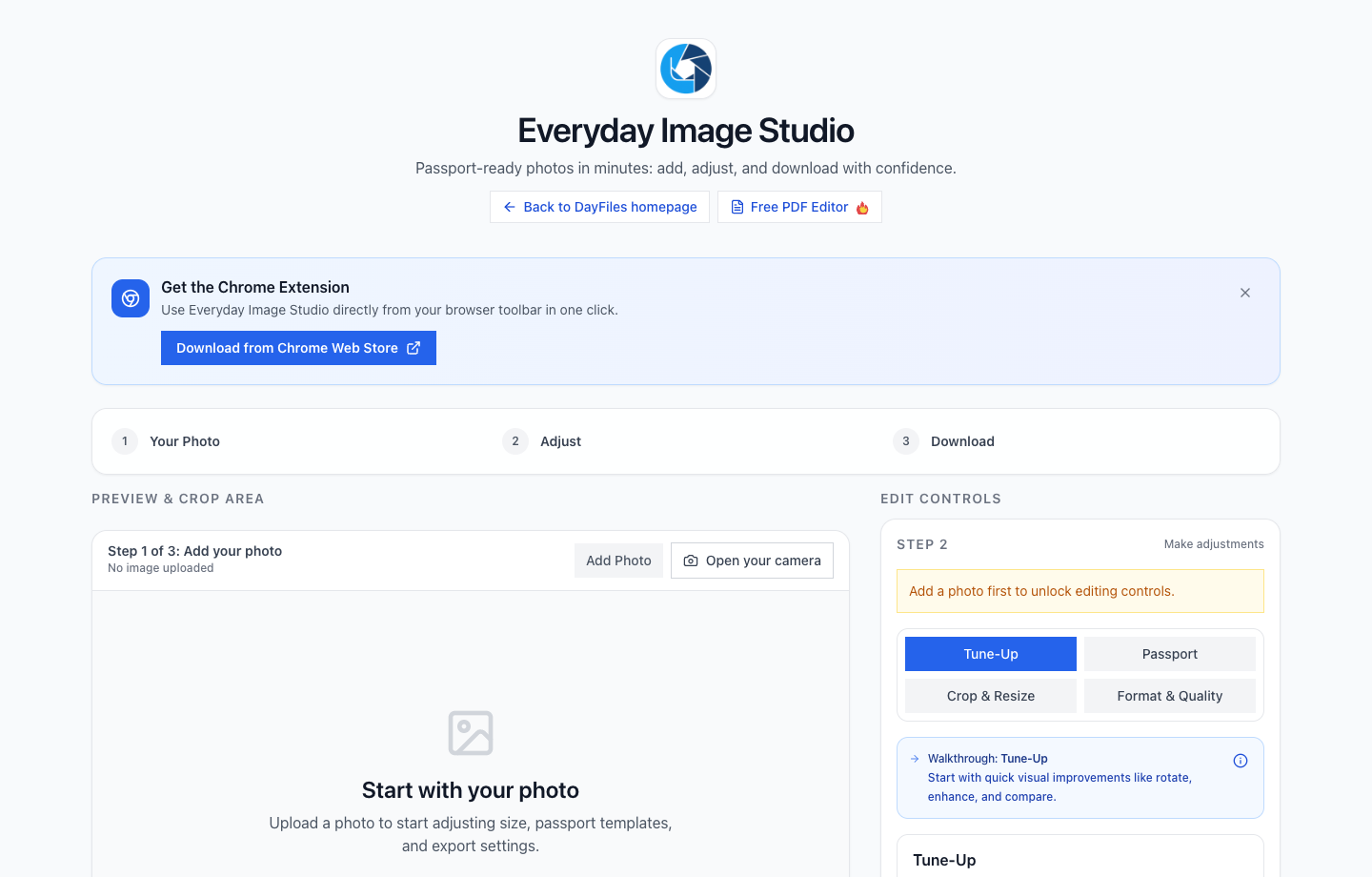
The correction work belongs in Everyday Image Studio, but the surrounding submission routine may also involve JPG conversion and PDF packet assembly.
How should the visa photo resubmission checklist be used under deadline?
Run the checklist in order and stop at the first issue that would make the file bounce back later. Teams often waste time by finishing the full review on a version that was already wrong at the top of the sequence. It is faster to fix the blocking problem immediately, then restart the short review with a cleaner file.
The checklist also works best when one person owns the final pass. Shared responsibility sounds safe, but it often leaves the riskiest fields and final file names in a gray area where everyone assumes someone else checked them.
Which issues should stop the visa photo resubmission workflow immediately?
Stop immediately for source-version confusion, obvious requirement mismatches, missing pages or images, and any field or export setting that would cause the destination to reject the file. Those are not “clean up later” problems. They are signs that the checklist did its job by catching the issue before the handoff.
Less serious issues can be grouped into one correction pass, but blocking issues should interrupt the run at once. That approach keeps the checklist useful under real working conditions instead of turning it into a slow ritual that teams ignore.
How should the final owner document the visa photo resubmission result?
The final owner does not need a long memo. A short note in the folder name, handoff message, or archive convention is enough if it clearly tells the next person what changed and what the file is ready for. That tiny bit of documentation is often what separates a reliable checklist from a checklist that only helped the person who ran it.
What should the next person never have to guess about visa photo resubmission?
They should never have to guess which copy is current, which destination rule shaped the export, or whether the file already passed a final review. If those three points are obvious, the checklist is doing more than catching errors. It is reducing the amount of interpretation required from the next operator.
That matters because many file problems are not caused by a missed crop or a wrong field. They are caused by ambiguity. A stronger checklist turns ambiguous status into visible status before the handoff happens.
What does a strong visa photo resubmission final pass feel like?
A strong final pass feels calm and specific. The reviewer knows which fields, pages, or exports deserve extra attention and which parts of the file can be trusted because the earlier steps were handled cleanly. That is the real payoff of a checklist: it reduces uncertainty at the last moment instead of adding more generic work.
Why this visa photo resubmission checklist is worth keeping
The checklist earns its place when it helps the next run go faster with fewer surprises. Once the team or individual has a repeatable final pass, the file work becomes easier to trust even before the export happens. That longer-term reduction in uncertainty is what makes a checklist valuable rather than merely procedural.
More Dayfiles guides for visa photo resubmission
- eis passport photo checklist
- student visa application story
- How to Convert Images to JPG for Consistent Delivery
What “ready” should mean for visa photo resubmission
Ready means the file can move to its next destination without another person needing to guess what changed, what is final, or what still needs correction. That standard is what makes the checklist worth using.
The stronger the checklist becomes, the less likely the next person is to treat the file like a mystery. That is the real gain from deepening this kind of page.